Your Ad Here

Monday, January 30, 2017

Sarawak aims to increase economic growth to 6.5 per cent — Uggah

KUCHING: Sarawak has drawn up a strategic plan, which it says focuses on enhancing its annual growth from the current 4.4 per cent to 6.5 per cent, to achieve a high income status by 2030.

Deputy Chief Minister Datuk Amar Douglas Uggah Embas said under the Sarawak Socio-Economic Transformation Plan (SETP), the state is projected to grow at 6.5 per cent per annum to realise its aspiration to become a high income state by 2030.

“For the state to reach its target, it needs to develop a comprehensive integrated and balanced socio-economic plan and the plan is to focus on raising the income level and intensifying the economic growth and reduce income disparity,” he told a press conference after chairing the first State Socio-Economic Transformation Plan committee meeting at a hotel here yesterday.

According to him, SETP will be focusing on six key result areas; namely Manufacturing, Agriculture, Tourism, Urban Development, Environmental Development and Housing.

Uggah added that the recommendations will be submitted to the Steering Committee to be chaired by Chief Minister Datuk Patinggi Tan Sri Adenan Satem in October for incorporation into the 2017 budget.

When asked what would be the challenges to become a high income state, Uggah replied that the committee had identified various challenges – among them the need to transform rural areas by raising the people’s monthly income to RM4,000.

“And then there is a need to bring more tourists and more need to attract private investment to the country, so all those are the challenges we have identified and to transform our economy,” he said.

“Those are the tasks and we are working at all sectors; what are the programmes that we can implement, what are the issues that need to be resolved to ensure whatever programme that the government approves will be implementable and to be implemented as scheduled,” He added.

Uggah, who is also Minister of Modernisation of Agriculture and Rural Economy, said once Sarawak is able to overcome all these challenges, only then will it become a high income state by 2030.

“With all the programmes that we will recommend, we hope we will achieve the 6.5 per cent

growth towards 2030 that is an annual growth, so that is the key.”

Among those present were Second Minister of Finance Dato Sri Wong Soon Koh, Assistant Minister for Rural Economy (Interior Areas) and Plantation Datuk Francis Harden Hollis, Assistant Minister for Urbanisation Datuk Talip Zulpilip, Assistant Minister for Science Research and Biotechnology Dr Annuar Rapaee, Deputy State Secretary Datu Ismawi Ismuni, State Planning Unit director Datu Mohamad Abu Bakar Marzuki and Entrepreneurs Development and Halal Industries Unit (Chief Minister’s Department) director Samat Junai.

Friday, December 9, 2016

cattle rearing, pineapple cultivation and swiftlet farming to boost farmers’ income

State to focus on cattle rearing, pineapple cultivation and swiftlet farming to boost farmers’ income

KUCHING: Sarawak is looking into three sectors of agriculture – cattle rearing, pineapple cultivation and swiftlet farming – to further boost the income of local farmers, said Deputy Chief Minister Datuk Amar Douglas Uggah Embas.

He added that Chief Minister Datuk Patinggi Tan Sri Adenan Satem had been briefed on the matter during their visit to Malaysia Agriculture, Horticulture and Agrotourism (Maha) 2016 exposition that is being held at the Malaysia Agro Exposition Park in Serdang (MAEPS) Selangor, yesterday.

“We want to focus on these three sectors, especially in cattle rearing so that we can be more self-sufficient as at the moment we are able to meet only 10 per cent of local demand for beef.

“For this purpose, we will engage the veterinary department to assist us to produce more artificial inseminations so that we can produce bigger cattle for their meat. Our main target is to reduce imported beef and be more self-sufficient in the long run,” Uggah told The Borneo Post here yesterday.

As for pineapple cultivation, Uggah, who is also the Minister of Modernisation of Agriculture and Rural Economy, disclosed that Sarawak planned to become the biggest producer of the fruit in the country in the near future as it had plenty of suitable land to cultivate the crop, especially in Samarahan, Sarikei and Bintangor.

“Currently, Johor is the largest producer of pineapples but they have limited land so we will focus on expanding the acreage so that we can be the main producer in the near future. Once we have the quantity, we can go downstream such as processing them into juice and tarts and even can them for both local market and for export,” said Uggah.

On swiftlet farming, he hoped that the farmers involved in the industry will be able to meet the standard of the China market as it is huge.

“Under our current budget, we have set aside RM2 million for 100 poor farmers to venture into this lucrative market and we hope that it would be able to assist them to succeed,” he stressed.

Uggah was accompanying the Chief Minister to MAEPS Selangor yesterday, during which they made time to visit the Sarawak booth.

Maha is a leading agricultural show in the country to actively promote agriculture and agro-based industries, showcasing all the different components of the fast-growing agricultural industries. The biennial event takes place together with The Farmers, Livestock Producers and Fishermen’s Day (HPPNK).

Meanwhile, it was reported that the Maha 2016 exhibition had recorded 1.5 million visitors over a period of five days.

According to news report, Agriculture and Agro-based Industry Minister Datuk Seri Ahmad Shabery Cheek said the highest number of visitors was recorded last Sunday at 560,000.

Maha 2016 themed ‘Our Food, Our Future’, which was officially opened by Prime Minister Datuk Seri Najib Tun Razak on Saturday, is expected to draw three million visitors during the duration of the show from Dec 1 to 11.

During the visit, the Chief Minister was accompanied by his wife Datin Patinggi Datuk Amar Jamilah Anu, Uggah’s wife Datin Amar Doreen Mayang, Deputy Federal Minister of Agriculture and Agro-based industries Datuk Anthony Nogeh Gumbek, Deputy Federal Minister of Domestic Trade, Cooperatives and Consumerism Datuk Henry Sum Agong and Ministry of Modernisation of Agriculture and Rural Development permanent secretary Datu Ngenang Janggu.


Sunday, October 30, 2016

Black and white pepper production

Black and white peppercorns are both the fruit of the pepper plant, but they are processed differently.Black peppercorns are picked when almost ripe and sun-dried, turning the outer layer black. To produce white peppercorns, this outer layer is removed before or after drying, leaving only the inner seed
Pepper harvester

Patented harvester 

Saturday, August 6, 2016

Kelulut honey — a health elixir from stingless bees

Elli stirs kelulut bee honey in a glass of plain water.

Elli stirs kelulut bee honey in a glass of plain water.

AFTER chatting for about 10 minutes, he excused himself to get some drinks for us from the house.

While he went in, I walked around to see his simulated empurau habitat which he has been maintaining for about 10 years.

About a minute later, he came come out with a small dark-maroon glass container and 1.5 litres of cold water and placed them on a table outside the verandah across the facade of his house.

Moments later, he went into the house again and came out with two glasses and two tablespoons. I began to wonder what was he doing when he walked into the house a third time. Before I could figure it out, he emerged and walked towards the table, carrying a half-full plastic basket, containing some nicely packed bottles of dark-gold coloured juice.

While I was busy taking pictures of his empurau reared in a cement tank, he sat on his chair and invited me to join him, saying: “I want you to try my kelulut honey.”

My first thought was “is it kelulut honey from stingless bees that I once wrote about?”

Then I replied: “Ok, sure, thank you. After all, I have never tasted this honey before in my life.”

So he dribbled slightly more than a tablespoonful into a glass, poured cold water in and stirred it. Next, he moved the glass towards me, inviting me to try the concoction. I lifted up the glass and drank.

My reaction: “Eh, why so sour?”

Yes, the drink was sour compared to normal honey which is very sweet.

Curious about the taste, I asked if I could taste the pure honey in the bottle and he allowed me to have a scoop.

The pure honey tastes sourish sweet and is also runny, unlike normal honey which is sticky.

Elli taking a close look at the castles of a bee colony.

Elli taking a close look at the castles of a bee colony.

I guess this stingless bee honey must be having much less sugar content than regular honey – hence the tangy flavour. It’s also not as “heaty” as normal honey.

I wrote about the rearing of meliponines (stingless bees) sometime in 2014 and have always assumed the taste of kelulut honey, derived from plant resins the bees use to build their hives and honey pots, is sweet.

So I looked towards Dr Elli Luhat, sitting in front of me, and asked: “Why is your honey sour.”

He smiled: “The taste of this honey varies at different times of the year, depending on the flowers and trees the bees visit. But generally, the taste of kelulut honey is quite different from that of ordinary honey bees. It’s not as sweet as other varieties of honey.”

Elli, who is a forest scientist, said the taste was greatly influenced by the nectars or flowers the bees were feeding on, adding that sometimes, it could taste slightly sweet while at other times, like some wood or wild flowers.

“If the bees feed on sweet flowers within their rearing environment, then the honey can taste slightly sweet,” he explained.

Elli’s kelulut honey is collected from a farm along Kuching-Serian Road. Most of the time, the bees feed on gaharu flowers which the apiarists have integrated with other plants on the same piece of land.

Right now, Elli and his partner collect about 200 litres of kelulut honey per month from the 3,000 boxes or colonies at the farm. The honey is sold either to friends or exported to Sabah.

“We started rearing these bees in 2014 and it took about six months for each colony to build their honey pots. Based on my experience, the period for each colony to start producing honey also depends on the availability of nectars while the quantity of honey produced depends on population size,” he said.

According to Elli, the queen bee plays a very significant role in the growth of the colonies.

“The queen bee is the production house. The more productive the queen, the bigger the population, and the more the honey produced.”

He said what the queen bee produced were actually worker bees whose task is to collect nectars and bring them back to the castles (boxes).

“To fill the honey pots or bags, a lot of worker bees are needed. If you could have three or four queens inside each box, then you could have millions of bees and a great deal more honey.”

However, Elli pointed out that it was sufficient to have two queens in each colony.

“So our immediate challenge is to take out some of the queens from the existing boxes – if there are more than two – and put them in separate boxes to multiply. I will have to identify the queens and also the best plants for the colonies to feed on.”

He believed after almost two years, some of the castles could be having more than two queens since the total bee population at the farm now runs into the millions. The queens are bigger and normally live in a special place within the colony.

Aside from gaharu trees, Elli is also looking into planting other trees that bear flowers – most probably sweet flowers.

“The bees need to feed on nectars otherwise there will be no honey to fill the pots,” he noted.

Elli stressed there is no compromise on the quality of their honey, assuring they would only sell pure honey with high propolis (bee-glue) contents.

Propolis is produced by bees through their saliva mixed with bee food such as pollen, bark, tree shoots and flowers. The bees gather resins from pine and other cone-producing evergreen trees, blend the resins with wax flakes and pollen, then bring them back to the hives where they use the sticky mess to patch holes, seal cracks and build panels.

Propolis which determines the quality of the honey, is said to have properties that boost the immune system. The bee-glue contains all 16 amino acids, glucose, vitamins A, B, C, D and E, bioflavonoids and minerals. Bioflavanids improve and repair the body systems of people and livestock.

“In the wild, because of the propolis, other insects never attack the honey. The glue is a natural insect repellant,” he added.

According to Elli, it’s easy to test whether honey is diluted or pure.

“To test for purity, just drop some of the honey on the floor, and over time, when you see ants eating it or fungus growing on it, then the honey is not pure. This indicates sugar or sugar cane juice could have been added after the honey had been diluted to increase the quantity.”

He believed one of the benefits of kelulut honey was that it could boost energy and strength, given that stingless bees are active all year round.

“You can just drink kelulut honey without mixing with water or any food. It’s good to drink it daily,” he said.

In addition to its unique flavour, there are also numerous studies conducted onthe medicinal values and health benefits of kelulut honey on the basis that stingless bees produce honey and propolis rich in antioxidants.

Propolis can function as anti-fungal, anti-fungus, anti-bacterial and anti-inflammatory remedies and is commonly used as an active ingredient in cosmetics, creams and tablets.

Antioxidants have many functions, especially in containing free radicals and preventing cancer.

Propolis produced by the stingless bees.

Propolis produced by the stingless bees.

Saturday, July 23, 2016

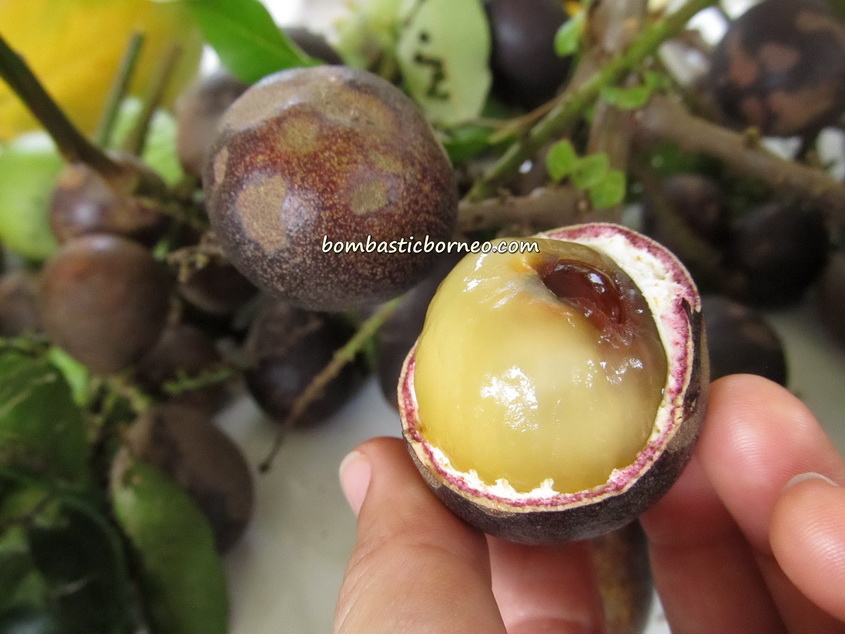
Cristal Fruit Pometia pinnata Family : Sapindaceae

Pometia pinnata
J.R.Forst. & G.Forst.

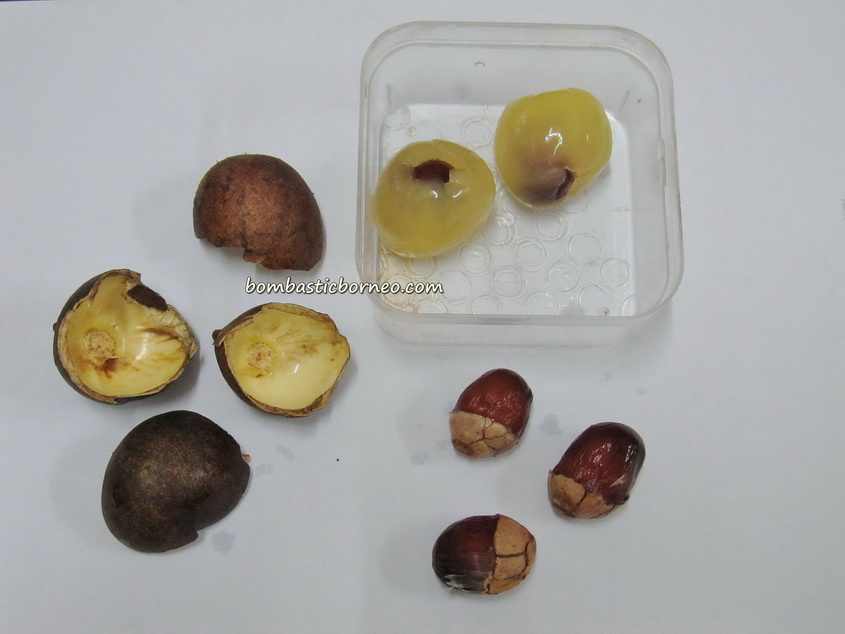
Pometia pinnata is a large tropical hardwood and fruit tree species, with common names including matoataun treeisland lycheetava, and of the plant family Sapindaceae (maple and lychee family). Naturally widespread, the trees grow through south east Asia,Malesia and the Pacific region. They grow up to tall canopy trees of 40 m (130 ft) tall.[1] They have pinnate leaves and green, yellow, or dark red fruits up to 4 cm (1.6 in) long, each with three seeds, surrounded by a fleshy arilsomewhat like a lychee, edible and popular fruit for eating.

The first time we came across this fruit was at Pak Awang’s orchard in Biawak, Lundu.  An Indonesian friend told us this fruit was called ‘matoa’ meaning crystal and that it was native to Iran Jaya.  Lately we have also come across fruit vendors at the 3rd Mile Market in Kuching selling this fruit too.  But surprisingly it did not taste anywhere near Pak Awang’s.

Local Name: Kasai, Matoa, Dawa
Botanical Name: Pometia pinnata
Family : Sapindaceae

Matoa is a tropical fruit mainly from Sri Lanka, Malaysia, Philippines, East Indonesia, Papua and the Pacific Islands. It is not a very common fruit found elsewhere.

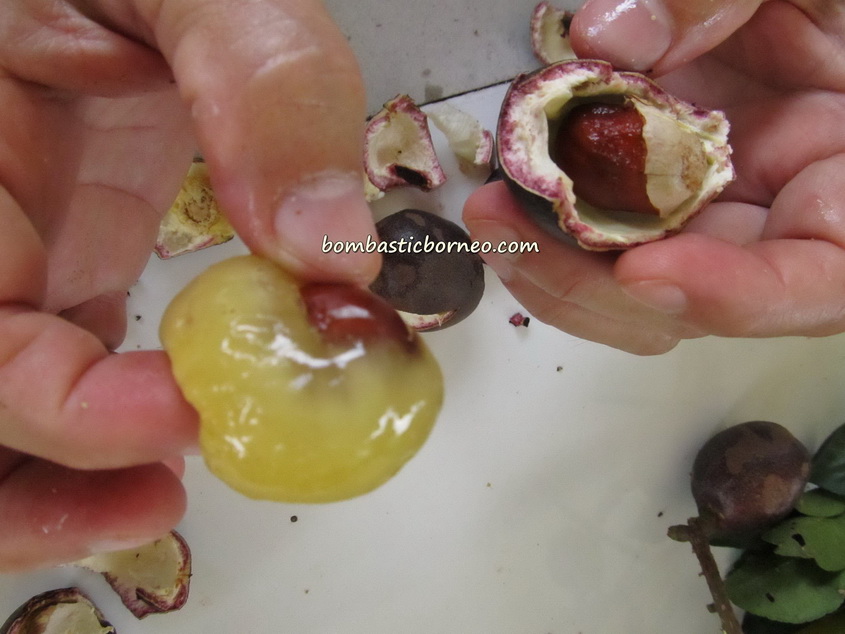
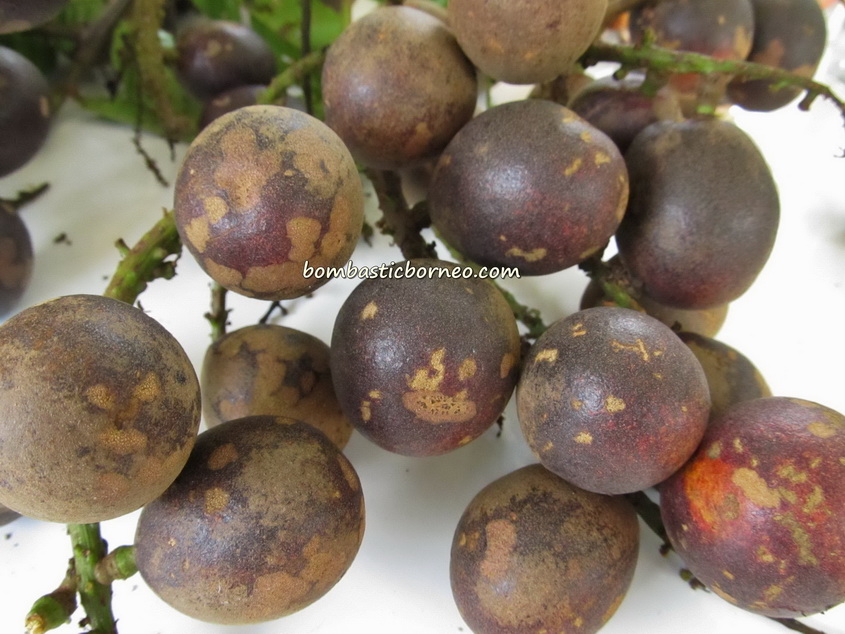
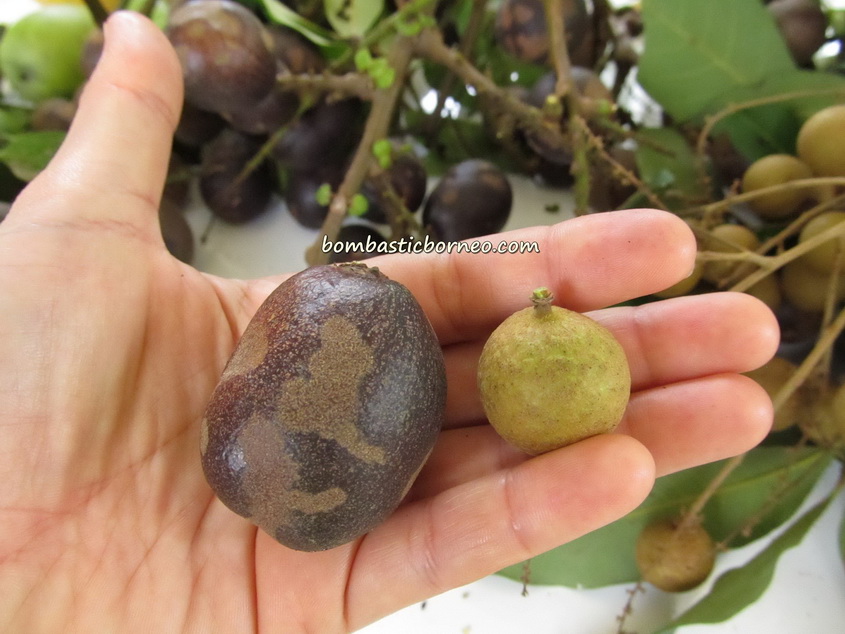
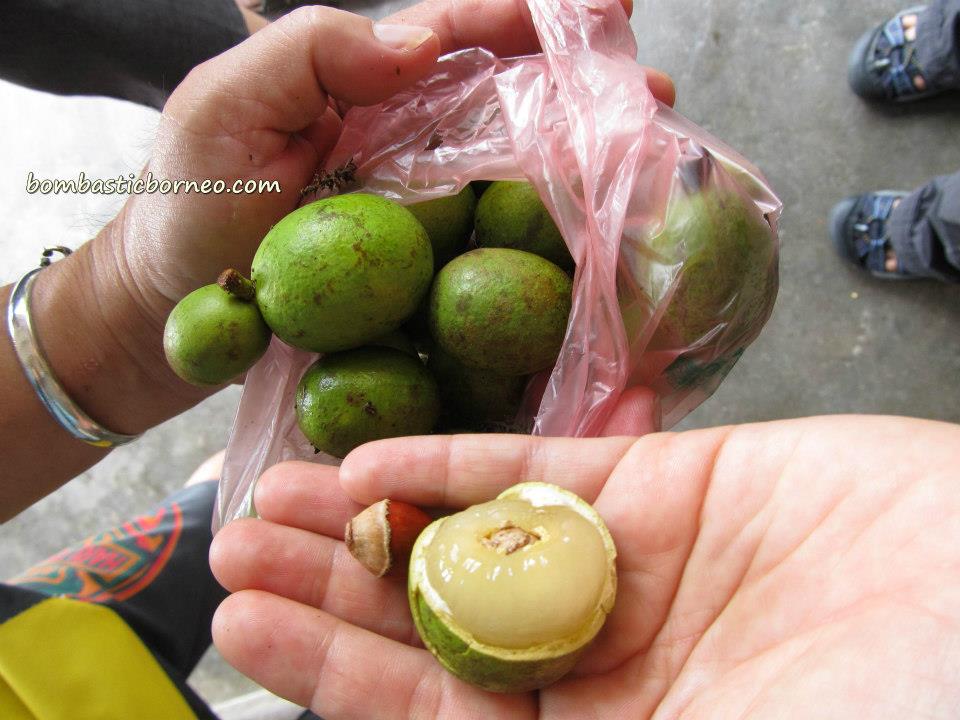
The fruit is much bigger than longan & has a hard shell.  It is green when immature and will turn purplish red, green, dull brown or almost black, depending on the various varieties.  The yellowish white pulp is also much thicker, sweeter & the texture is chewy. It has a single seed which looks like a type of nuts. The seed is edible too and it is usually consumed roasted or boiled.


This is the crystal fruit of Kuching city.  It is not a new fruit.  It is an old native fruit of Malaysia known as 'kasai' or 'matoa'.  This fruit is also known as the crystal longan or the crystal lychee.  Some local people call it 'dragon's eyes'.  Some say it tastes like longan.  Some say it tastes like rambutan.  The fruit looks like the colour of mangosteen with its dark red purplish colour.  To eat it, fruit sellers will teach us to crush two fruit in the palm of our hand.  Some would break its shell with a mortar or hammer.  The name 'crystal' stuck with us as the flesh is yellowish translucent, like a citrine crystal.  The fruit has moderate sweetness.  That is why it is popular with people who have diabetes.  This fruit has high economic potential with a kilo fetching a price of RM15.00 a kilo. The seed is like a longan-hard and enamel like.

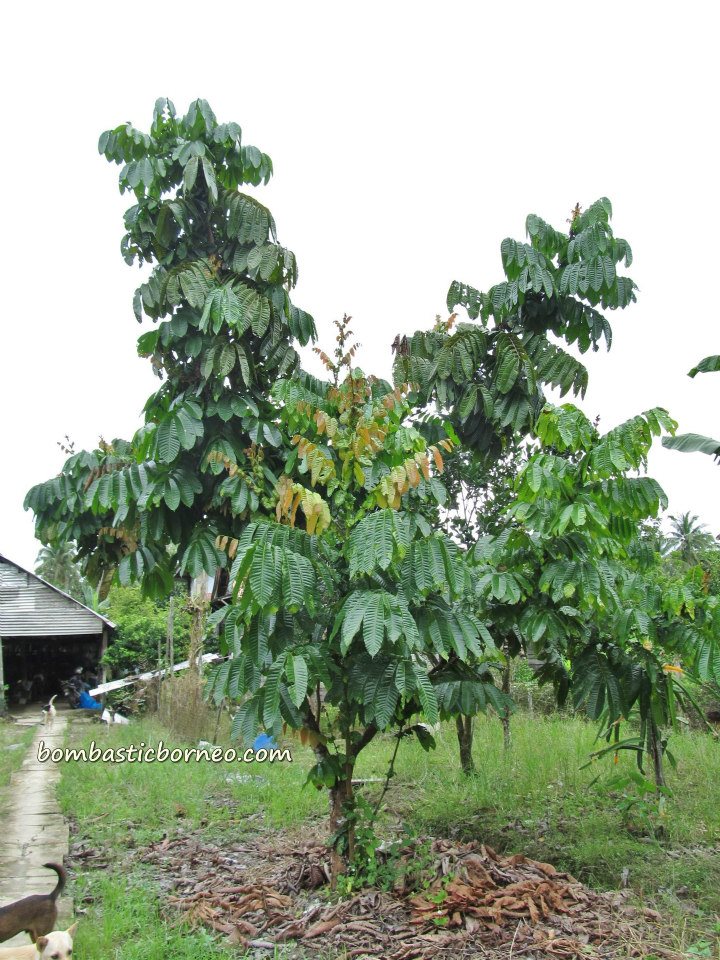
Because of its catchy name, a young sapling will fetch a price of RM25.00.  People are keen to try out new fruit trees. Unknown to them, the kasai fruit tree can grow to great heights with its fruits perched very high on top of the trees. This fruit is widely cultivated in Lundu, a coastal village at the southern tip of Sarawak, probably because a timberman was so taken in by the fruit in Papua New Guinea that he came back and grew it.  This fruit is known as the Fijian longan in this neighbouring country.  The scientific name for this fruit is pometia pinnata from the sapindaceae family.


Tanaman Pokok Kristal

Pokok Buah Kristal
Ini lah Pokok Kristal. Pokok ni paling rare. Kalau tak silap, pokok Kristal ni hanya ada di Sarawak je. Pernah tengok ? Aku pun tak pernah tengok pokok Kristal sebelum ni. Selepas ayah aku tanam baru aku tau pokok ni. Haha. Tapi aku pernah rasa buah ni memang sedap dan manis. Tak sabar nak tunggu berbuah. Ada 2,3 pokok gak yang dah besar. Tak lama lagi berbuah la pokok ni.

Longan jenis ini sememangnya pendatang baru ke negara kita. Sebab tu lah longan jenis ini banyak nama Longan Kristal, Longan Fiji, Longan Brazil dan macam-macam lagi. Terdapat 3 jenis warna longan yang pernah saya temui iaitu i)Merah Hitam ii)Hijau dan iii)Kuning. Antara ketiga-tiga jenis ini, jenis Merah Hitam menghasilkan buah yang paling besar, manakala jenis Kuning menghasilkan buah paling manis.
 
Pokok longan ini sememangnya amat senang penjagaan nya. Mungkin disebabkan ianya adalah pokok pendatang baru, maka musuh-musuh semulajadi bagi tanaman ini masih belum banyak.  Jika dilihat di pasaran, buah Longan kristal boleh mencecah harga RM10 sekilo, dan untuk bilangan sekilo buah ini hanya dalam 30-40 biji sahaja bergantung kepada saiz. Dari Segi penjagaan
pendatang baru ini masih belum ada manual-manualnya di mana-mana sumber rujukan pertanian rasmi (*setahu saya lah). walaubagaimanapun kalau di lihat mengikut saiz pokok, saya jangkakan pokok jenis ini sesuai ditanam 7.5m X 7.5m dan menghasilkan 175 batang pokok/ Ha.


Tengok gambar bawah ni. Sumber dari Google.. 

Wednesday, December 16, 2015

Department of Agriculture to be revamped starting Jan 1

THE Department of Agriculture (DOA) will undergo a re-organisation exercise with effect from Jan 1 next year.

According to Minister of Modernisation of Agriculture Datuk Patinggi Tan Sri Alfred Jabu, the revamp would enable the department to be in a better position to play a pivotal role in its quest to complement the state government’s aspiration to achieve Vision 2020.

“In preparation for the forthcoming 11th Malaysia Plan (2016 to 2020), I have continued to work very closely with senior members of my ministry and DOA together with the State Secretary in designing a very comprehensive revamping and restructuring plan aimed at giving an overall improvement to give effective delivery to the people by concentrating on four major components in line with DOA Sarawak’s vision — ‘A Transformed High Income Agriculture Community by 2020’,” he said when presenting his winding-up speech yesterday.

He said the four major components were field research to enable successful research finding to be immediately adopted by the farmers, increasing productivity by the farmers through good management and the use of biotechnological advancement and mechanisation, processing to get higher added values for the products, and marketing which would be intensified by the government so that farmers could get increased volume in sales to a wider market and enjoy better income.

“Basically the revamped Agriculture Structure Plan is aimed to strategically organise DOA 2,700 officers into three operational zones with a view to improve and accelerate our agriculture service deliveries to the rural communities.

The three zones are northern zone comprising Bintulu, Miri and Limbang divisions; central zone comprising Mukah, Sibu, Sarikei and Kapit divisions, and southern zone comprising Kuching, Serian, Samarahan, Sri Aman and Betong divisions complementing the ordinary function of the DOA headquarters in Kuching.

Another key feature of the new DOA involved the creation of 37 critical senior posts (Jawatan Berasaskan Caruman) to beef up and strengthen the new focus for research, production, processing and marketing at the three operational zones with the primary aim of increasing overall efficiency and capacity thus providing great opportunities for farmers, stock breeders and fishermen to earn better income.

He said the new DOA would serve as a catalyst for rural transformation through the setting up of 46 Rural Agriculture Project Stations (RAPS) throughout the state.

“In the past three years, I have also requested for 46 RAPS to be built by the government in coastal areas and in the many remote areas in rural Sarawak.

“Each of these RAPS will be manned by one senior staff in-charge, to be assisted by two agriculture assistants, and two home extensions female officers to provide home economic services for women folk in rural areas and two drivers.

He said each of these RAPS would have appropriate functional new office premises, comfortable accommodation and the necessary support logistics to enable it to be effective in serving the need of the state’s rural farming communities.

“Once completed, they will become important rural institutions and as major stepping stones for government officers and government agencies to serve the people in rural areas throughout Sarawak.”


Read more: http://www.theborneopost.com/2015/12/17/department-of-agriculture-to-be-revamped-starting-jan-1-jabu/#ixzz3uX4n5HTF